

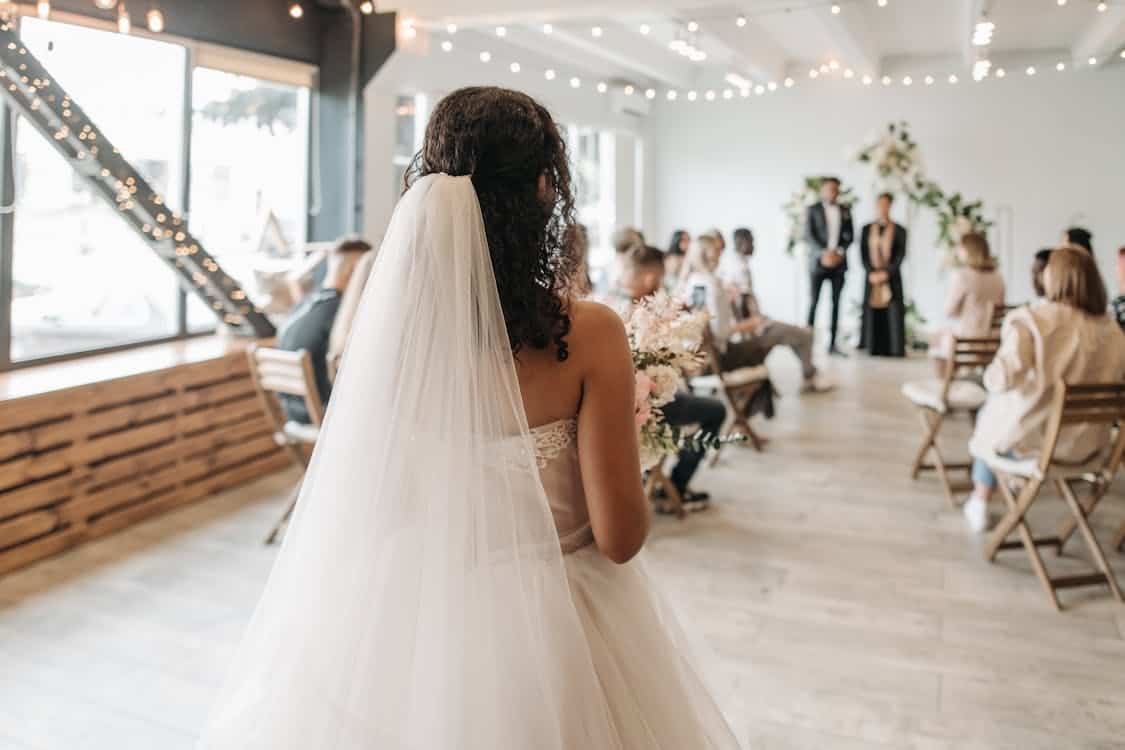
There’s a version of this conversation that gets told as a trend story, full of adjectives about intimacy and intentionality and the reassuring idea that smaller is more meaningful. That version isn’t wrong exactly, but it misses the more interesting part of what’s actually happening to Toronto’s wedding floral market.
The micro-wedding shift isn’t just a cultural preference. It’s a structural change that affects what florists get asked for, what actually works in a room of 25 people, and which design approaches have become either more or less relevant as a result.
The numbers behind the shift are real. Pre-pandemic Canadian weddings averaged 154 guests, according to WeddingWire’s Global Wedding Report. Toronto venues that once built their business around 150-person receptions have spent the past several years developing dedicated packages for events under 50.
Bellamy Loft in North York, Berkeley Fieldhouse downtown, Toronto Wedding Chapel — these spaces exist specifically to serve couples who have decided, for reasons that have nothing to do with COVID anymore, that a smaller gathering suits them better. The guest list ceiling that used to feel like a compromise now reads, for a large segment of Toronto’s engaged couples, as a deliberate choice.
The Scale Problem With Traditional Floral Design
A ceremony designed for 200 guests requires arrangements scaled to be read from a distance. An arch needs to be full and dense because the couple standing in front of it is 40 feet from most of the room. Centerpieces need to carry visual weight from across a table that might seat 12. The design logic of large-scale wedding florals is fundamentally about legibility at distance — big blooms, clear silhouettes, generous quantities of everything.
None of that applies when the room holds 25 people. At that scale, guests are close to every arrangement for most of the event. A centerpiece that works from 20 feet away looks overworked from 3 feet. The arch the couple stands in front of is 8 feet from the front row. The flowers that photograph best in intimate settings tend to be the ones that reward close inspection — textural variety, interesting secondary blooms, structural detail that doesn’t read from a distance but creates a completely different experience when you’re sitting next to it for two hours.
Which Styles Are Actually Gaining Ground
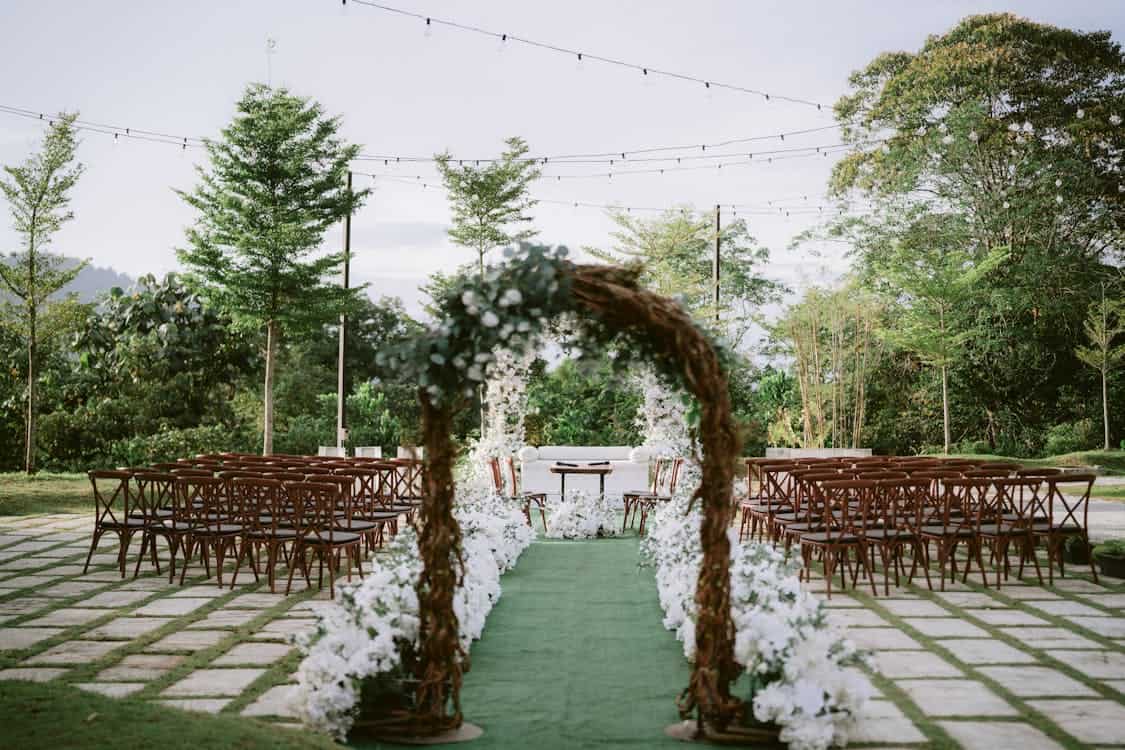
This is producing a genuine shift in which styles Toronto florists are developing fluency in for 2026. Garden-style arrangements, which emphasize a loose, naturalistic structure and lean heavily on foliage and secondary blooms, are well-suited to the close-viewing conditions of micro-weddings.
Single-variety bouquets, which would have looked sparse in a large venue, carry more visual weight when the person holding them is two feet from every guest during the ceremony. Minimalist centerpieces with a single statement stem and a clean vessel read as considered rather than incomplete when the table holds eight people who can actually see them properly.
Many couples in 2026 are spending between $3,000 and $6,000 on full-service wedding florals, and micro-wedding budgets tend to sit at the lower end of that range — not because the per-stem cost is lower, but because the quantity is smaller. That compression creates a different kind of floral conversation. When the total budget is $2,500, the choices become more deliberate.
Florists working micro-weddings report that couples arrive having thought more carefully about which specific arrangements matter most to them, rather than trying to cover every surface. The result is often more considered work, even if it’s less voluminous.
Photography at Intimate Scale
There’s a photography dimension that’s easy to underestimate. The photographers working micro-weddings in Toronto are frequently shooting in tighter spaces with smaller groups, which means floral detail shows up in photographs differently than it does at a large reception.
A loose garden-style bouquet that would get lost in a wide shot of a 200-person reception becomes the main visual subject of an intimate portrait. A textured centerpiece in a small room gets its own close-up. Couples who think carefully about how their florals will photograph at intimate scale often land on styles that look quite different from the convention-centre-appropriate designs that still dominate bridal magazine coverage.
There’s also something happening with per-head spend. Because the overall event is smaller and the guest list more curated, couples planning intimate Toronto weddings frequently have more budget per guest to allocate to florals than couples planning large receptions. A $3,000 floral program for a 25-person wedding is a very different experience than the same budget stretched across 150 — the intimacy of the space allows more considered placement, and what might read as restrained at scale reads as genuinely elevated when viewed from close range.
Florists who work exclusively in large-format wedding production have found the shift toward micro events a meaningful recalibration of their craft. The techniques that serve a 300-guest ballroom are not the same techniques that serve a 25-person loft ceremony in the Distillery District. The city’s best designers have adapted; some have built separate service tiers specifically designed for sub-50 guest events.
That specialisation is itself a marker of how firmly the micro-wedding model has embedded itself in Toronto’s wedding market — and how seriously the floral industry here has responded to it with a different set of design tools rather than simply scaling down the same approaches that worked for larger rooms.