

The most important word in many dental implant studies is not “survival.” It is “time.” A material can perform well during initial healing and the first year of function, yet patients choose implants with the expectation that they will remain useful far longer.
A registered study is comparing two-piece zirconia and titanium implants over a five-year follow-up. The post-market randomized study covers single-tooth implants restored with ceramic crowns and includes appearance and patient satisfaction among its outcomes.
Five years gives researchers time to record later bone changes, component repairs and shifts in patient satisfaction that an early report can miss.
The study will not settle every material debate. It is tied to particular implant systems, selected tooth positions, a defined restoration, and a digital workflow. What it can do is fill part of the gap between promising short-term outcomes and the evidence needed for long-horizon decisions.
For patients, that gap explains why titanium and zirconia dental implants are often discussed differently. Titanium carries decades of accumulated clinical experience. Zirconia offers appealing properties and an expanding evidence base, but some modern designs have not been observed for the same length of time.
Longer follow-up changes the research question
Early studies can show whether osseointegration occurs, wounds heal normally and obvious failures appear after loading. An implant-supported tooth has a much longer life than that first report.
Over several years, researchers can observe whether marginal bone levels remain stable, whether gum tissue changes, and whether mechanical or restorative complications accumulate. They can also see whether patient satisfaction remains high after the novelty of treatment has passed.
Five years is still not a lifetime, but it creates a more demanding test than a single annual visit. Repeated chewing loads, hygiene patterns, professional maintenance, and ordinary changes in oral health have more time to influence the result.
Material comparisons especially benefit from that longer view. Titanium is relatively ductile, while zirconia is a ceramic. Their responses to stress, surface wear, connection design, and manufacturing variables are not identical. Some differences may be clinically unimportant, while others may take time to become visible.
A longer study can separate fixture survival from the broader success of the restoration. An implant may remain integrated while the crown, abutment, screw or surrounding tissue needs treatment. Patients live with the complete restoration.
Outcome definitions matter. “Survival” usually means the implant remains in place, while “success” may include stricter criteria involving bone, tissue, symptoms, stability and complications. A percentage without its definition can make two studies look more comparable than they are.
The digital workflow narrows the comparison
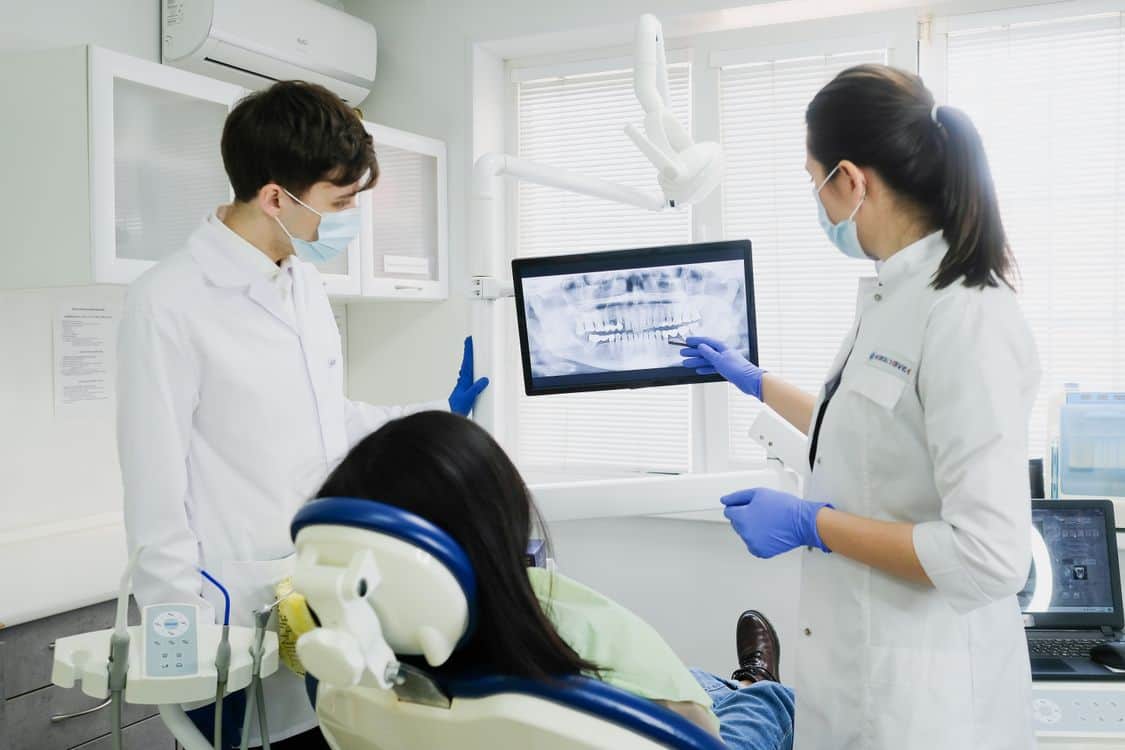
The registered trial uses a fully digital workflow. That detail narrows the question in a useful way. Implant material is being evaluated within a modern chain of scanning, planning, placement, restoration, and follow-up rather than in isolation.
Digital planning may help standardize parts of treatment across centers, but it also means the results belong to that workflow. A practice using different imaging, planning, surgical, or restorative methods should not assume every outcome transfers without qualification.
The trial focuses on single-tooth replacement in specified regions of the mouth and uses screw-retained ceramic crowns. That is not the same biomechanical problem as supporting a full arch, replacing a terminal molar, or treating a patient with severe bone loss.
This distinction is easy to miss in public discussions. Once a study is described as “zirconia versus titanium,” its narrower treatment conditions can disappear. Yet those conditions determine what the research can legitimately answer.
Two-piece zirconia systems allow more restorative options than traditional one-piece ceramic implants. Separating the fixture and abutment adds flexibility, along with a connection that researchers must watch for mechanical problems.
The comparison therefore involves systems, not raw samples of metal and ceramic. Implant geometry, surface treatment, connection, abutment, crown, surgical technique, and patient selection all contribute to the observed outcome. Material is central, but it never acts alone.
Patients need evidence that matches their case
Patients don’t have to wait for every five-year result. A provider should say which conclusions have long-term support and which still depend on early data.
For titanium, a provider may point to long-term documentation and broad restorative flexibility. For zirconia, the rationale may involve esthetics, a preference for a ceramic system, favorable tissue characteristics, or a specific product with supporting clinical results.
The patient can ask how long the exact proposed system has been studied. This is more precise than asking how long “zirconia implants” have existed. A newer two-piece design may not share the full history of an earlier ceramic product, just as a particular titanium design should not borrow every result reported for titanium generally.
Patients should also ask what alternatives would remain if the preferred material were unavailable or unsuitable. If both can work, the provider can explain the tradeoffs. If one is clearly favored, the explanation should connect to anatomy, restoration design, bite, esthetics, or evidence rather than a universal claim.
Maintenance planning is part of that evidence match. The ease of cleaning, access for professional care, retrievability of the crown, availability of replacement components, and management of grinding or clenching may affect the practical life of the restoration.
The trial can show how these ceramic implants behave after years of chewing and maintenance. Its limits will remain clear: one study of specific systems and single crowns can’t pick a material for every patient.